



The Federal Aviation Administration (FAA) temporarily halted flight departures across the United States after a major technical disruption affected the country's air traffic control systems.
According to US Transportation Secretary Sean Duffy, the national airspace system was fully reopened at 8:15 p.m. Eastern Time on November 13. However, he warned that flight delays and cancellations could continue for several days due to the scale of the disruption.
Officials said the problem originated within aging communication and radar infrastructure used by air traffic control facilities. The technical issue reportedly affected the transmission of critical radar and communication data between regional control centers.
According to US authorities, older network switches and routers struggled to process a surge of operational data, causing instability in communication and radar information systems.
Duffy said the disruption began at approximately 3:36 p.m. Eastern Time, when several control centers experienced difficulties maintaining stable air traffic communications.
Officials added that the incident was linked to legacy infrastructure rather than newly installed systems.
Air traffic control systems are responsible for managing aircraft positions, altitudes, routing, and communication with pilots.
When these systems become unreliable, controllers can no longer safely coordinate aircraft movements.
To reduce safety risks, the FAA temporarily stopped new departures while allowing aircraft already in the air to continue flying and land under controlled procedures.
Authorities said approximately 3,500 aircraft were airborne when the disruption occurred.
US Homeland Security officials said there is currently no evidence that the incident was caused by a cyberattack or foreign interference.
According to preliminary assessments, the disruption appears to have resulted from technical and mechanical failures within existing systems.
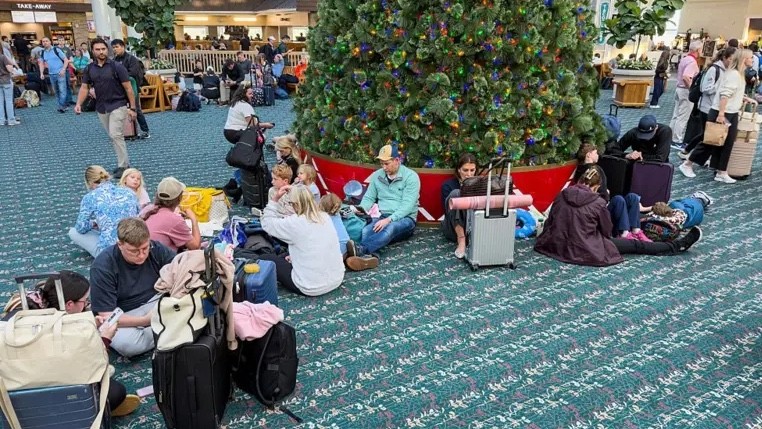
According to reports, more than one million passengers were affected as thousands of flights were delayed or canceled.
Data from aviation analytics company Cirium showed that at least 827 aircraft were forced to alter their flight plans.
Of those, 670 flights returned to their departure airports, while 157 aircraft landed at alternative destinations.
The incident has renewed concerns about the age of US air traffic infrastructure.
Secretary Duffy said parts of the system still depend on outdated communication technology and called for increased congressional funding to modernize air traffic control operations.
Officials say investigations into the exact causes of the disruption are continuing.