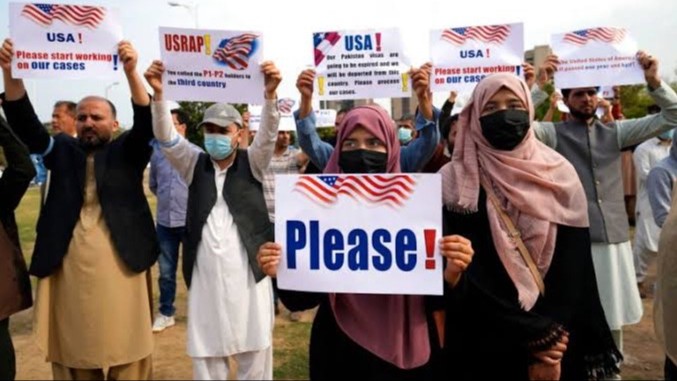





Thousands of Afghan visa applicants remain in limbo despite a U.S. federal court ruling that blocked a broad visa restriction affecting dozens of nationalities.
According to a report by NPR, the U.S. visa process has not fully returned to normal, leaving many applicants outside the United States still waiting for decisions on their cases.
The restriction, introduced in January 2026, reportedly affected more than 280,000 immigration visa applicants, including family-sponsored and employment-based applicants.
In August, federal judge Jeannette Vargas ruled that the policy was unlawful, finding that a blanket restriction based on nationality was inconsistent with U.S. law and exceeded the authority of Marco Rubio, the U.S. Secretary of State.
However, despite the court ruling, the U.S. Department of State has introduced additional review and screening procedures for visa applicants.
According to the report, U.S. embassies and consulates have begun implementing expanded assessments aimed at determining whether applicants could become dependent on public assistance programs in the United States.
These new reviews may affect not only new applicants but also individuals whose visa cases were already in progress, including some who had received visa approvals but had not yet been issued physical visas.
Immigration lawyers say interview delays, administrative reviews, and processing backlogs continue to prevent many families from benefiting immediately from the court's decision.
Although the ruling ended the nationality-based restrictions affecting citizens of Afghanistan and 74 other countries, it does not mean visas will automatically or immediately be issued.
As a result, many Afghan applicants continue to face delays related to additional documentation requests, interview scheduling, security reviews, and final visa issuance.