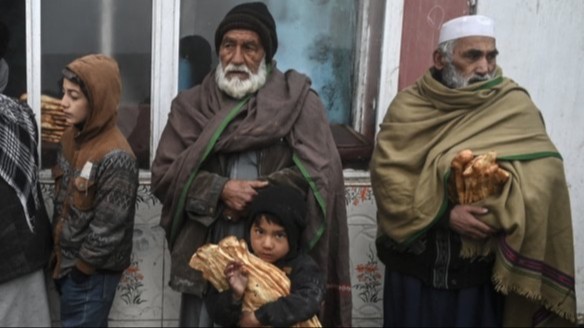


Around 19.2 million people in Afghanistan are expected to face severe food insecurity during the coming winter months, according to a joint report released on October 15 by international humanitarian organizations.
The report estimates that the figure represents approximately 38 percent of Afghanistan's population and marks an increase compared to the same period last year.
Of those affected, nearly five million people are expected to face emergency levels of hunger and will require urgent food assistance to survive.
The most severe conditions are forecast in Badakhshan, Badghis, Daikundi, Ghor, Samangan, Sar-e-Pul, and rural parts of Ghazni.
The report also highlights worsening malnutrition across the country. In 2027, nearly four million women and children are expected to require treatment for acute malnutrition.
Approximately one-quarter of these cases are projected to involve severe and potentially life-threatening forms of malnutrition.
Richard Trenchard, the Food and Agriculture Organization (FAO)'s representative in Afghanistan, said that although agricultural production improved this year, many families without stable incomes still cannot afford nutritious food.
He stressed the need for timely support to farmers, stronger agricultural programs, and more opportunities for employment and income generation.
Meanwhile, John Aylieff, head of the World Food Programme (WFP) in Afghanistan, warned that hunger and malnutrition are rising at a time when humanitarian funding is declining.
The report identifies high food and transportation costs, unemployment, reduced humanitarian assistance, and the large-scale return of Afghan migrants from Iran and Pakistan as key factors increasing pressure on household incomes.
Despite improved rainfall and harvests in 2026, many families continue to struggle because of limited purchasing power and insufficient income.
The organizations have called for expanded food assistance, emergency agricultural support, and larger nutrition programs before winter to prevent further deterioration in humanitarian conditions.