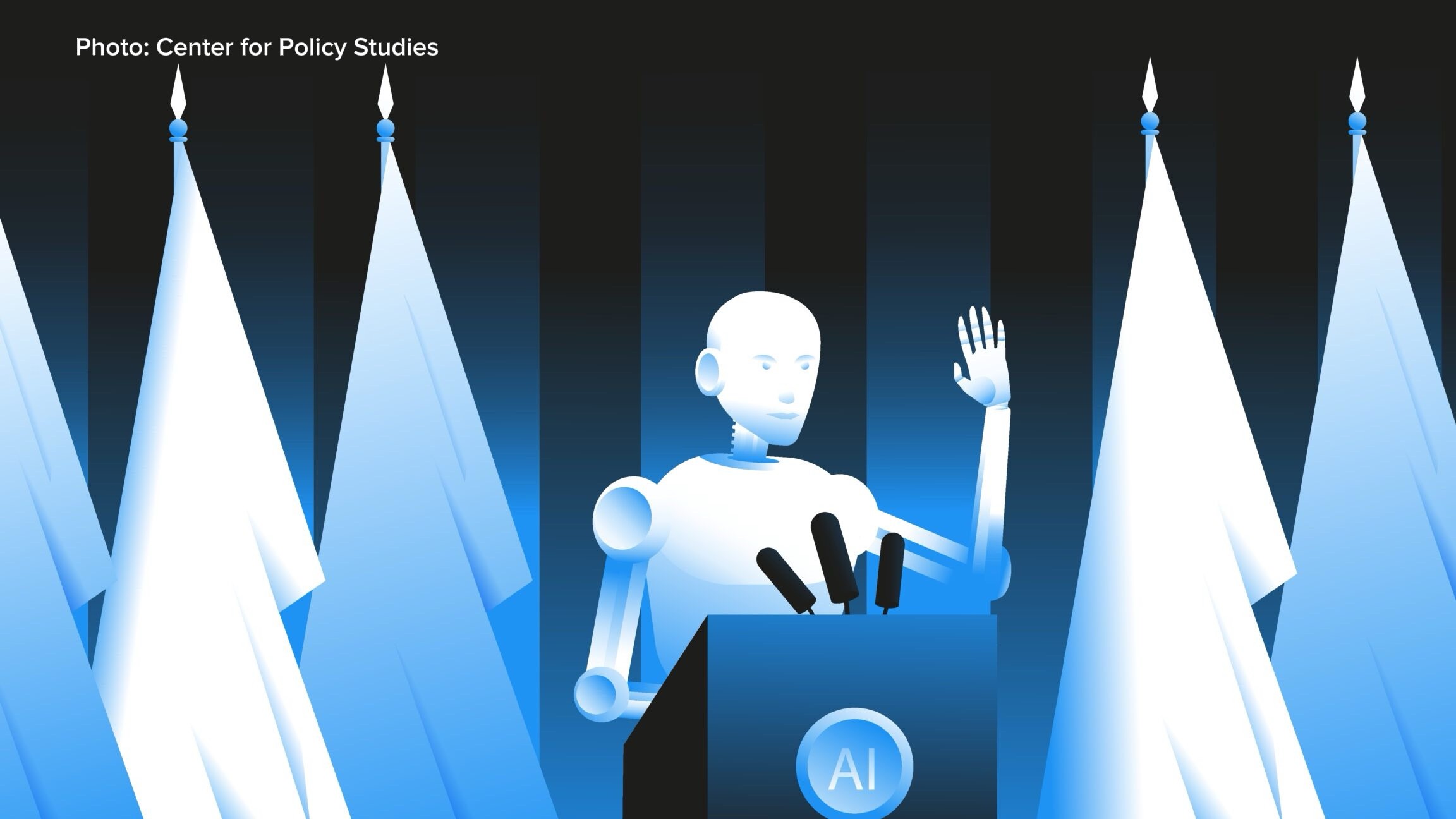





Artificial intelligence is increasingly finding its way into politics, including the drafting of speeches delivered by elected officials.
According to an analysis published by The Economist, the use of AI-assisted speechwriting in the UK Parliament was almost non-existent in 2024 but has since increased significantly.
One example highlighted in the report is British Member of Parliament Steve Yemm, who raised questions in Parliament earlier this year about the growing influence of technology on society. However, an AI-detection tool developed by Pangram later assessed that the speech was likely generated entirely by artificial intelligence.
Yemm subsequently acknowledged that his office uses publicly available AI tools for various parliamentary tasks, including preparing speeches, while operating within parliamentary rules.
The study suggests that the United Kingdom is not alone. Parliamentary speeches in Australia and Canada reportedly show even higher levels of AI involvement, while members of the U.S. House of Representatives are also making notable use of the technology.
Reactions among politicians have been mixed. Some lawmakers have openly acknowledged using AI tools, while others have disputed the findings of AI-detection systems.
The report identified Conservative MP Neil Shastri-Hurst among the politicians whose speeches showed some of the highest levels of AI-assisted writing, with signs of AI involvement detected in a large share of his parliamentary remarks over the past year.
In contrast, speeches by senior cabinet members and major party leaders showed little evidence of significant AI use.
The issue extends beyond parliament. A survey conducted by Public First for The Economist found that British voters are more uncomfortable with politicians using AI to write speeches than with other forms of AI-generated political content.
Researchers suggest that many voters view parliamentary speeches as a direct reflection of a politician's beliefs, reasoning, and representation of public interests, rather than simply a method of delivering information.
While AI can save time and improve efficiency, critics argue that overreliance on the technology could weaken politicians' personal voice, judgment, and authenticity.
The report also notes that AI-generated texts often contain repetitive phrases and recognizable linguistic patterns, making them easier to identify in some cases.
At the same time, experts caution that AI-detection tools are far from perfect and cannot conclusively determine whether a text was written by artificial intelligence.
As AI adoption accelerates, a broader question is emerging: if machines increasingly draft speeches, policy documents, and even legislative proposals, who ultimately bears responsibility for the ideas and decisions they contain?