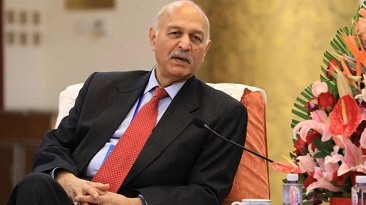



Former Pakistani politician Mushahid Hussain has said that the Soviet-Afghan war created conditions that enabled Pakistan to expand its nuclear program, arguing that Islamabad gained strategic importance for the United States and its Western allies following the Soviet Union’s intervention in Afghanistan in 1979.
In a recent interview, Hussain said Moscow initially expected a short military campaign when Soviet forces entered Afghanistan. However, the conflict evolved into a prolonged war and became one of the key battlegrounds of the Cold War between the United States and the Soviet Union.
According to Hussain, the U.S. Central Intelligence Agency (CIA), working through Pakistan’s Inter-Services Intelligence (ISI), provided approximately $2.1 billion in support for Afghan Mujahideen fighters during the conflict. He said Saudi Arabia contributed a similar amount. Hussain had previously made similar remarks in 2023 regarding American and Saudi financial support during the anti-Soviet campaign.
He also claimed that training programs associated with the conflict involved around 100,000 Afghan fighters and 20,000 Arab volunteers, mentioning figures such as Osama bin Laden and Ayman al-Zawahiri.
Hussain said that after the Soviet withdrawal and the end of the war, some militants who had been trained during the conflict later joined armed movements in other regions, including Kashmir, Palestine, and Algeria.
A significant part of Hussain’s remarks focused on the relationship between the Afghan war and Pakistan’s nuclear program.
He argued that the Soviet intervention elevated Pakistan’s geopolitical value for Washington and Western powers, allowing Islamabad to take advantage of its strategic position to advance its nuclear capabilities.
The issue has been raised by Hussain on previous occasions and has also appeared in discussions documented by Pakistan’s Senate regarding the Afghan jihad, foreign financial assistance, and Pakistan’s security and nuclear policies.
Hussain also commented on the U.S.-led intervention in Afghanistan in 2001, noting that the Taliban government was removed from power and that political arrangements for Afghanistan’s future were subsequently discussed at the Bonn Conference.
He argued that restoring Afghanistan’s former monarchy could have been considered as an alternative political model but that a republican system was ultimately chosen. Citing Cambodia as an example, Hussain suggested that a similar option might have contributed to greater stability in Afghanistan.
Hussain further stated that the Afghan war brought Pakistan certain economic and strategic advantages, but emphasized that its legacy should not be assessed solely through economic gains and losses.
He stressed that decades of experience have demonstrated that military solutions alone are insufficient to address Afghanistan’s long-term challenges and that political and regional approaches remain essential.
His latest comments come amid ongoing debates over the anti-Soviet conflict, Pakistan’s role, American and Saudi support for Afghan Mujahideen, and the long-term consequences of the war.