



 Fariba Faizi
123 views
“On the morning of August 13, 2022, a group of women in Kabul coordinated through a WhatsApp group. They planned to gather at different points first, so the Taliban would not immediately suspect that they were organizing a protest.
Mahjuba Habibi was one of them.
She was 34, originally from Andarab district in Baghlan province, and had spent years living in Kabul. Before the Taliban returned to power, she had worked for about 15 years as a teacher in government schools and had earned a degree in education.
By then, however, the classroom had changed. Girls’ schools had been closed, and the teacher who had spent years standing in front of students decided to take her voice into the street.

Habibi had also been involved in civil society and social activities in Baghlan before the Taliban takeover. When girls were pushed out of school, she says she felt she could no longer remain silent.
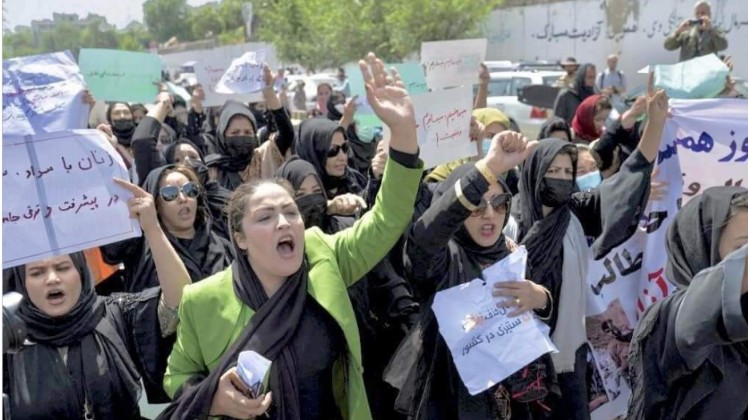
“Her experience was part of a wider pattern. Afghan women began protesting publicly soon after the Taliban takeover, despite the risks. On August 13, 2022, around 40 women marched in Kabul demanding “bread, work and freedom.” Taliban fighters fired into the air to disperse them, and reports from the scene said some protesters were beaten and their phones confiscated.
Habibi says the women eventually came together near Gulbahar Center and began the protest.
“When the gunfire began, the women ran for somewhere to protect themselves. Habibi says she and the other protesters reached a medicine depot that looked like a garage.

Eleven women, she says, including activist Munisa Mubariz, ended up inside. The place that had offered them shelter quickly became a place they could not leave.
“Reports from the same August 13 protest described women fleeing into nearby shops after Taliban fighters opened fire. Munisa Mubariz, one of the organizers and protesters, was publicly identified in coverage of the demonstration and said the movement would continue despite the crackdown.
“Habibi says the women remained inside the depot for more than three hours. Taliban members came in, insulted them and threatened them.
“She says women from the Taliban were also brought in to search them. Their phones were checked, and the protesters were made to promise that they would not join demonstrations again.
According to Habibi, the women were told that their protests were a way of following “the infidels” and that they should stay at home.
“The women were eventually released. Habibi says they were followed toward their homes after they left.
Habibi says she did not immediately return home. Protesters often stayed away until nightfall, moving between different places because they feared being followed.
When she finally arrived home that night, her family knew she had been at the protest. She was living in a shared household with her husband’s family. According to Habibi, her father-in-law reacted angrily and threatened her with the loss of her marriage and family life.
“For Habibi, who had a young child at the time, the words were devastating.
“ “The pressure on women protesters in Afghanistan did not end with the dispersal of individual demonstrations. Human rights investigations have documented arbitrary detention, threats, beatings and other abuses against women protesters and their families under Taliban rule.
But Habibi’s story is not only about what happened to her on one day. It is also about why she kept returning to a space that had become dangerous.
Before the Taliban takeover, Habibi’s work was inside the classroom. She taught for about 15 years in government schools. After girls were excluded from education, the subject of her activism became inseparable from the work she had already been doing.
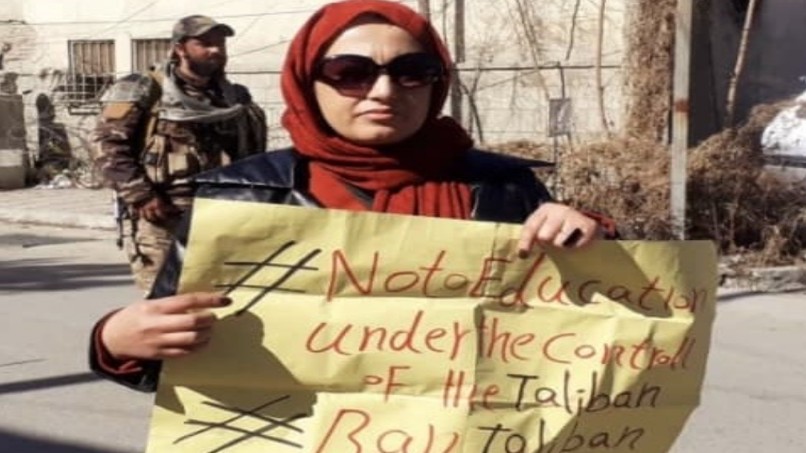
In the photographs she provided, she appears among women holding signs about education, freedom and work. In one image, the message is direct: “Not Education Under the Control of the Taliban.”
The classroom and the street became two parts of the same story. She had spent years helping students learn. Now she was protesting so that girls could return to school.
“She says she hopes the outside world will hear Afghan women’s voices.
“ For Habibi, the memory of August 13 is not simply a memory of a demonstration. It is a memory of the moment when a demand for education turned into a struggle for physical safety.
The women had gone out with signs and slogans. They ended up running from gunfire, locked inside a depot, searched and threatened. When Habibi returned home, the pressure continued there.
Yet she went back.
That decision is central to how she tells her own story. She does not describe herself only through what was done to her. She describes a choice to keep speaking even after she had learned the cost of doing so.

Habibi’s story began in a classroom. It moved into the streets of Kabul when the doors of girls’ schools closed. On August 13, 2022, the street became a place of gunfire and fear. Later, the threats followed her home.
But the story did not end there.
“For Habibi, continuing to speak is part of the same struggle that first took her from the classroom to the street: the belief that Afghan women and girls should be able to learn, work, move freely and have their voices heard.
Journalsit
Fariba Faizi is an Afghan journalist, she worked for different Media outlets