



 Zabihullah Shinwari
228 views
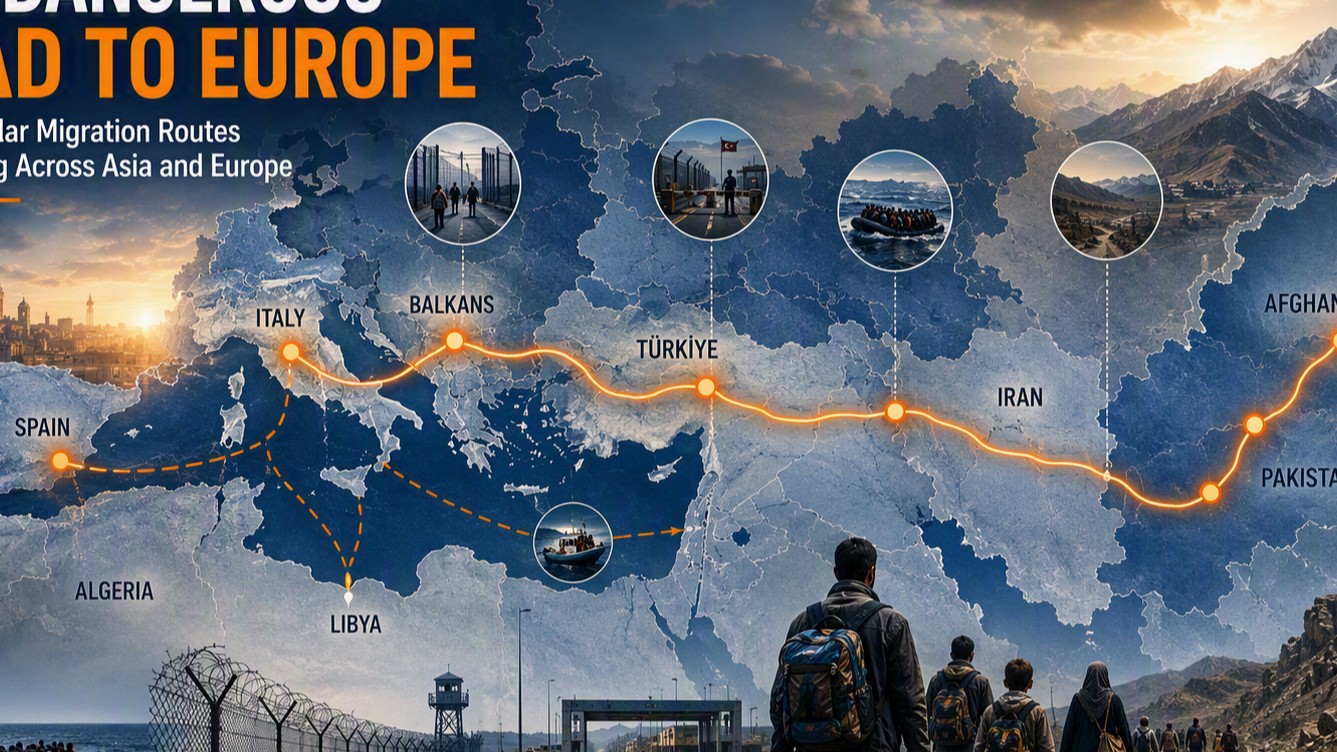
Afghans remain particularly visible along Europe’s eastern migration corridor. Turkey has become one of the most important transit and enforcement points in this movement.
According to the latest figures from Turkish migration authorities, more than 82,000 irregular migrants were detained during the first seven months of 2026, including 22,483 Afghans, making Afghans the largest national group among those detained. Nearly 7,000 people were also detained on suspicion of migrant smuggling during the same period.
The pressure is not limited to detention. UNHCR data have recorded large-scale returns of Afghans from neighbouring countries, including Turkey.
The agency reported that more than 13,500 Afghans had been deported from Türkiye by the end of April 2026, according to government figures. At the same time, Afghanistan continues to face the consequences of large-scale returns from Iran and Pakistan, adding pressure to an already fragile humanitarian and economic environment.
This combination of economic hardship, insecurity and limited prospects helps explain why irregular migration persists despite increasingly restrictive border controls. Migration decisions are rarely driven by one factor alone. For many people, unemployment and poverty interact with insecurity, political restrictions, lack of educational opportunities, family separation and the belief that life in Europe offers greater safety and economic stability. Social networks also play an important role: information from relatives and friends abroad can reduce the psychological barrier to migration and encourage others to attempt the same journey.
Yet the European migration map is changing. The latest figures from Italy demonstrate how quickly pressure can move between routes. UNHCR recorded 16,084 sea arrivals in Italy during 2026, representing a 56 percent decline compared with the same period of 2025. But the decline in arrivals through one corridor does not mean that irregular migration has disappeared. Instead, the routes and nationalities involved are changing.
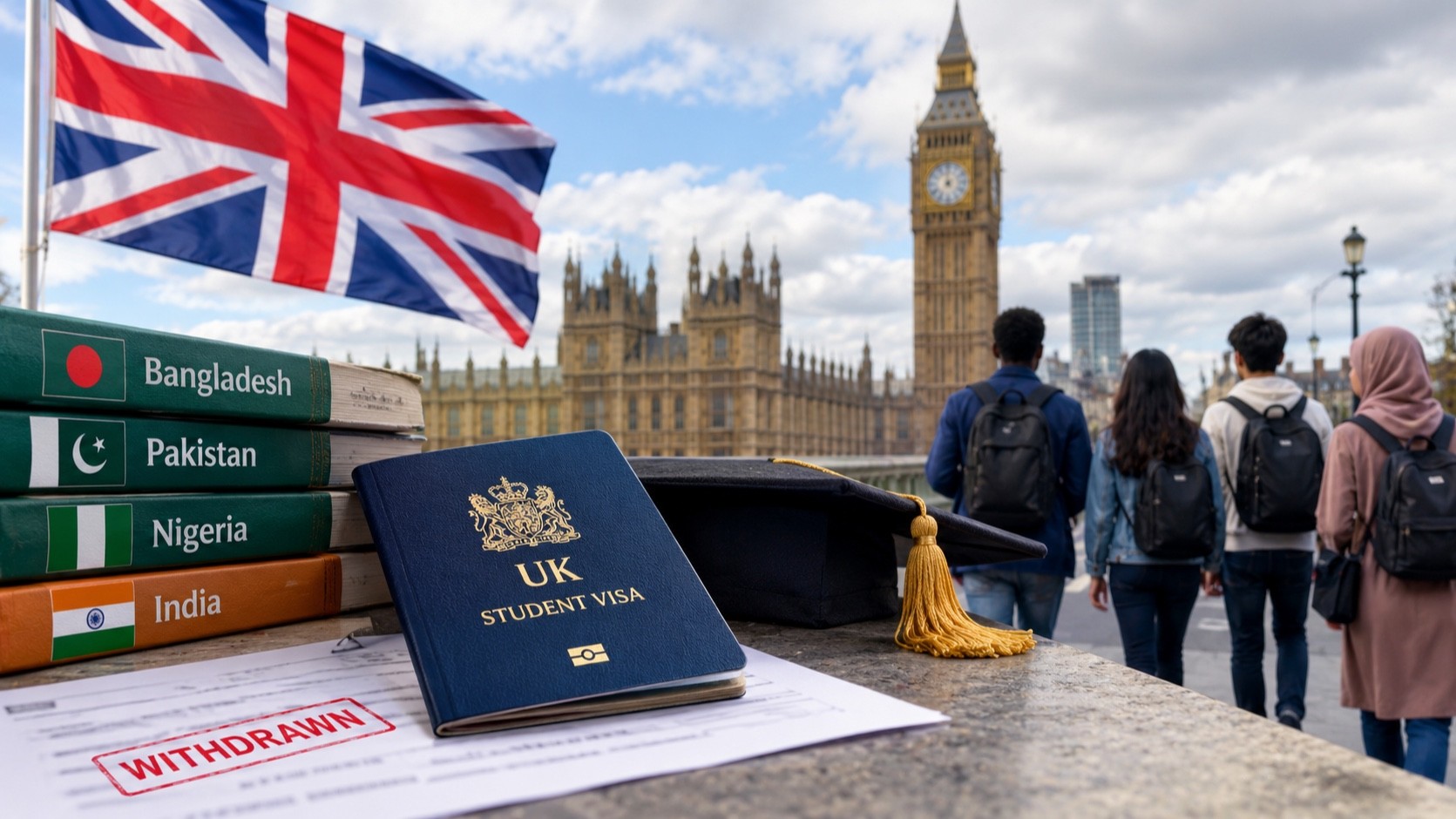
By the end of June, Bangladeshis accounted for around 29.5 percent of sea arrivals in Italy, followed by Somalis at 11.4 percent and Sudanese at 9.5 percent. Pakistanis represented 8.2 percent, while Algerians accounted for 7.7 percent. The figures show that migration towards Europe is not exclusively a Middle Eastern or African phenomenon: South Asian nationals remain a significant part of the movement.
The change is particularly visible in the routes from North Africa. The number of people arriving in Italy from Algeria increased compared with the previous year, while arrivals from Libya declined sharply.
This suggests that stronger controls, changing smuggling networks, weather conditions, political developments and enforcement cooperation can alter the geography of migration without eliminating the underlying demand to move.
Spain offers another example of how rapidly migration pressure can shift. The autonomous city of Ceuta, a Spanish enclave on the North African coast and one of the European Union’s two land borders with Africa, experienced an extraordinary migration crisis at the end of July. More than 50,000 people attempted to enter Ceuta from Morocco, according to Spanish estimates. Most subsequently returned to Morocco, but the episode created severe pressure on border authorities, reception facilities and local services.
The human cost was devastating. Spanish authorities initially reported 67 deaths before raising the official death toll to 72. However, Ceuta officials later said that 88 bodies had been recovered, illustrating the continuing uncertainty surrounding the final number of victims. Most of the deaths were linked to attempts to reach the enclave through the sea, while the circumstances surrounding the incident have prompted calls for further investigation.
The Ceuta crisis is a reminder that the dangers of irregular migration are not confined to the Mediterranean. In the first five months of 2026, the Spanish migrant-rights organisation Caminando Fronteras reported hundreds of deaths across several maritime and land routes connected to Spain. It recorded particularly high numbers on the Atlantic route, while deaths on the Algerian route also increased.
At Europe’s eastern frontier, meanwhile, migration routes have taken an entirely different form. Lithuanian border guards recently discovered an unfinished underground tunnel near the village of Pertakas, close to the Belarusian border. Authorities said the tunnel was approximately 11 metres long and suspected it could have been intended to facilitate irregular crossings from Belarus into Lithuania. Around 20 people were reportedly seen in the area when border guards arrived, and they fled back towards Belarus.
The tunnel incident is significant not because it represents a major migration route by itself, but because it illustrates how irregular migration networks can adapt when conventional crossing points become heavily controlled. Lithuania and other Baltic states have for years accused Belarus of facilitating or encouraging irregular migration towards the European Union, allegations that Minsk has rejected. The issue has therefore developed beyond migration policy into a broader dispute over border security and regional politics.
The wider picture is clear: Europe is not experiencing one single migration route or one single migration crisis. Instead, pressure is distributed across a network stretching from South and Central Asia through Iran and Tureky, across the Eastern Mediterranean and Balkans, and from North Africa towards Italy and Spain, while the EU’s eastern border faces a different set of pressures involving Belarus.
This shifting geography has an important policy implication. Border enforcement can change where people attempt to cross, but it cannot by itself eliminate the reasons people leave. When legal pathways remain limited while economic insecurity, political instability, conflict and human-rights concerns persist, people may continue searching for alternatives,often at greater financial and personal risk.
The consequences are also broader than the statistics suggest. Irregular migrants may face exploitation by smugglers, trafficking, detention, family separation, forced returns and prolonged uncertainty. The deaths recorded in the Mediterranean, along Spain’s borders and elsewhere are only the most visible part of a much wider humanitarian cost.
For governments in Europe and countries of origin alike, the challenge therefore goes beyond preventing irregular crossings. A sustainable response requires addressing the conditions that drive migration while expanding safe and legal avenues for people who have legitimate reasons to move. For Afghanistan and other countries in South and Central Asia, this means greater economic opportunity, education, security and protection. For Europe, it means combining effective border management with human-rights safeguards and realistic migration and asylum policies.
The continuing movement of people towards Europe demonstrates that migration routes are adaptable. When one corridor closes, another may emerge. The central question for policymakers is therefore not simply how to stop people crossing borders, but how to reduce the circumstances that make dangerous journeys appear to be worth the risk.
Zabihullah Shinwari
Journalsit
Journalist