

 jawad
55 views
From Unocal to Delta, and from the TAPI pipeline to gas extraction, nearly three decades of political developments surrounding Afghanistan’s oil and gas sector have once again returned to the headlines.
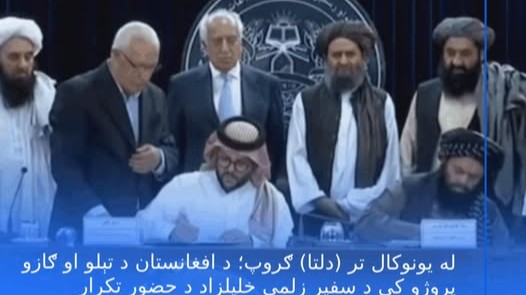
The Taliban government has signed a contract with Saudi Arabia’s Delta International for the exploration and extraction of oil and gas in the Kashk-Terpel basin in Herat. However, the presence of former U.S. Special Representative Zalmay Khalilzad at the signing ceremony has also revived an old and controversial chapter in Afghanistan’s energy projects.
The Taliban’s Ministry of Mines and Petroleum says the Kashk-Terpel basin covers approximately 22,000 square kilometers, with a large portion consisting of natural gas reserves.
Under the agreement, Delta International will invest $200 million during the first phase to explore and extract resources from seven gas blocks. The contract is set for 25 years, while the exploration period is eight years. According to the Taliban, the project is expected to help meet Afghanistan’s domestic gas needs and create employment opportunities.
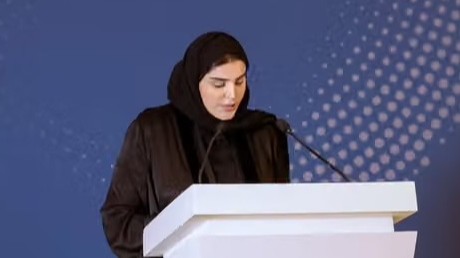
The signing ceremony in Kabul was attended by Taliban Deputy Prime Minister for Economic Affairs Mullah Abdul Ghani Baradar, Minister of Mines and Petroleum Hedayatullah Badri, Saudi company CEO Shahir Al-Taqi, and Zalmay Khalilzad.
Khalilzad described Afghanistan’s natural resources and its geographical position connecting the region as important factors.
However, the historical connection behind the agreement goes back to the energy and pipeline politics of the 1990s.
Delta itself says in its historical information that during the 1990s it had a strategic partnership with the U.S. company Unocal, and that the two companies were involved in a project to build a pipeline through Afghanistan to transport Turkmenistan’s gas.
U.S. congressional documents also identify both Unocal and Saudi Delta as members of the CentGas consortium at the time.
Former U.S. ambassador Zalmay Khalilzad has acknowledged in interviews that he worked as an adviser to Unocal at the time and played a role in arranging visits by several Taliban officials to the United States in late 1997 and facilitating their contacts with company officials. The Washington Post has also identified Khalilzad as an adviser to Unocal.
However, that pipeline project was never implemented because of the war in Afghanistan, deteriorating relations between the Taliban and the United States, and political instability in the region. Unocal withdrew from the project in 1998.
Now, nearly three decades later, the same Saudi company has returned to Afghanistan’s oil and gas market, while Zalmay Khalilzad has once again appeared at the signing ceremony.
Fazl Mahmood Fazli, former head of the Administrative Office of the Presidency under Afghanistan’s previous republican government, does not consider Khalilzad’s presence surprising.
The former official wrote:
“Khalilzad has had relations with the Taliban since 1996, and this is a continuation of Unocal’s efforts in 1997.”
Fazli also strongly criticized the current agreement.
Afghan journalist Firdous Kawoosh, meanwhile, links the agreement to the “pipeline” story of the 1990s. He highlighted the earlier ties between Unocal, Saudi Delta, and the Taliban and asked whether the old political calculations surrounding energy, which at the time focused on transporting Turkmenistan’s gas through Afghanistan, are now returning in a new form.
Beyond all these historical connections, the practical significance of the current agreement will largely depend on exploration results, continued investment, and how the project is implemented. Discussions on energy cooperation between the Saudi company and the Taliban had already been underway before the agreement. On September 5, the Taliban’s Ministry of Mines held talks with Delta International on investment in oil and gas exploration and extraction.
editor
news editor