




Ten years after the political divisions triggered by Brexit, public debate in the United Kingdom over rejoining the European Union has re-emerged, fueled by changing public attitudes and efforts to strengthen cooperation with Brussels.
The Brexit referendum, held on June 23, 2016, resulted in 51.9 percent of voters backing the UK's departure from the European Union, while 48.1 percent voted to remain. The outcome reshaped British politics and led to years of negotiations over the country's future relationship with the bloc.
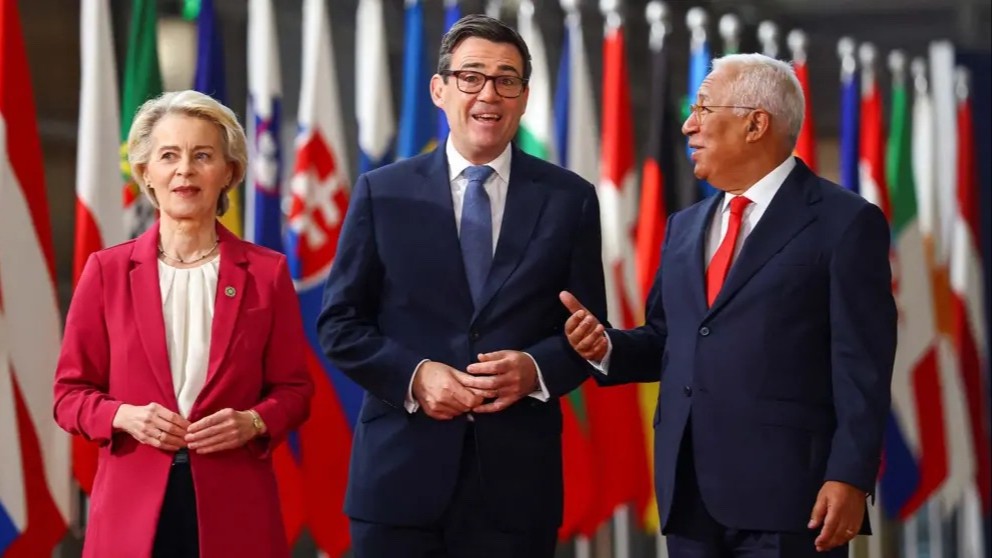
On November 20, British Prime Minister Andy Burnham announced a new agreement aimed at deepening cooperation with the European Union following talks in Brussels with European Commission President Ursula von der Leyen.
Key elements of the agreement include reducing trade barriers for food and agricultural products, expanding study and employment opportunities for young people on both sides, and increasing cooperation on carbon trading and climate-related economic policies.
Under the proposed youth mobility scheme, individuals aged 18 to 31 would be eligible to live, work, and study in participating countries for up to three years.
The British government says the package could contribute approximately £17 billion annually to the UK economy by 2040, while simplifying border procedures and reducing paperwork for food exports and imports.
According to polling expert Sir John Curtice, excluding undecided respondents, an average of 62 percent of Britons support rejoining the European Union, compared with 38 percent who favor remaining outside the bloc.
However, stronger cooperation with the EU does not necessarily mean a return to full membership. The UK government has not formally committed to re-entering the European Union, the Customs Union, or the Single Market.
Prominent Brexit supporters, including Reform UK leader Nigel Farage and former Prime Minister Boris Johnson, continue to oppose a return to EU membership. They argue that such a move could increase financial obligations and limit Britain's political sovereignty.
Critics of Brexit, meanwhile, contend that leaving the European Union created additional trade barriers, administrative burdens, and border controls while failing to deliver some of the economic benefits promised by Brexit campaigners.
Analysts note that while public support for closer integration with Europe appears to be growing, any decision on rejoining would involve broader political considerations, including public consent, party positions, and negotiations over future membership conditions.
Questions also remain about what terms the European Union might offer if Britain were to seek membership again, including whether the UK would eventually face pressure to adopt the euro currency.
For now, observers view the latest UK-EU agreement not as a reversal of Brexit, but as a significant step toward rebuilding relations between London and Brussels. The longer-term question remains whether Britain will pursue only closer cooperation or eventually seek full membership of the European Union once again.